
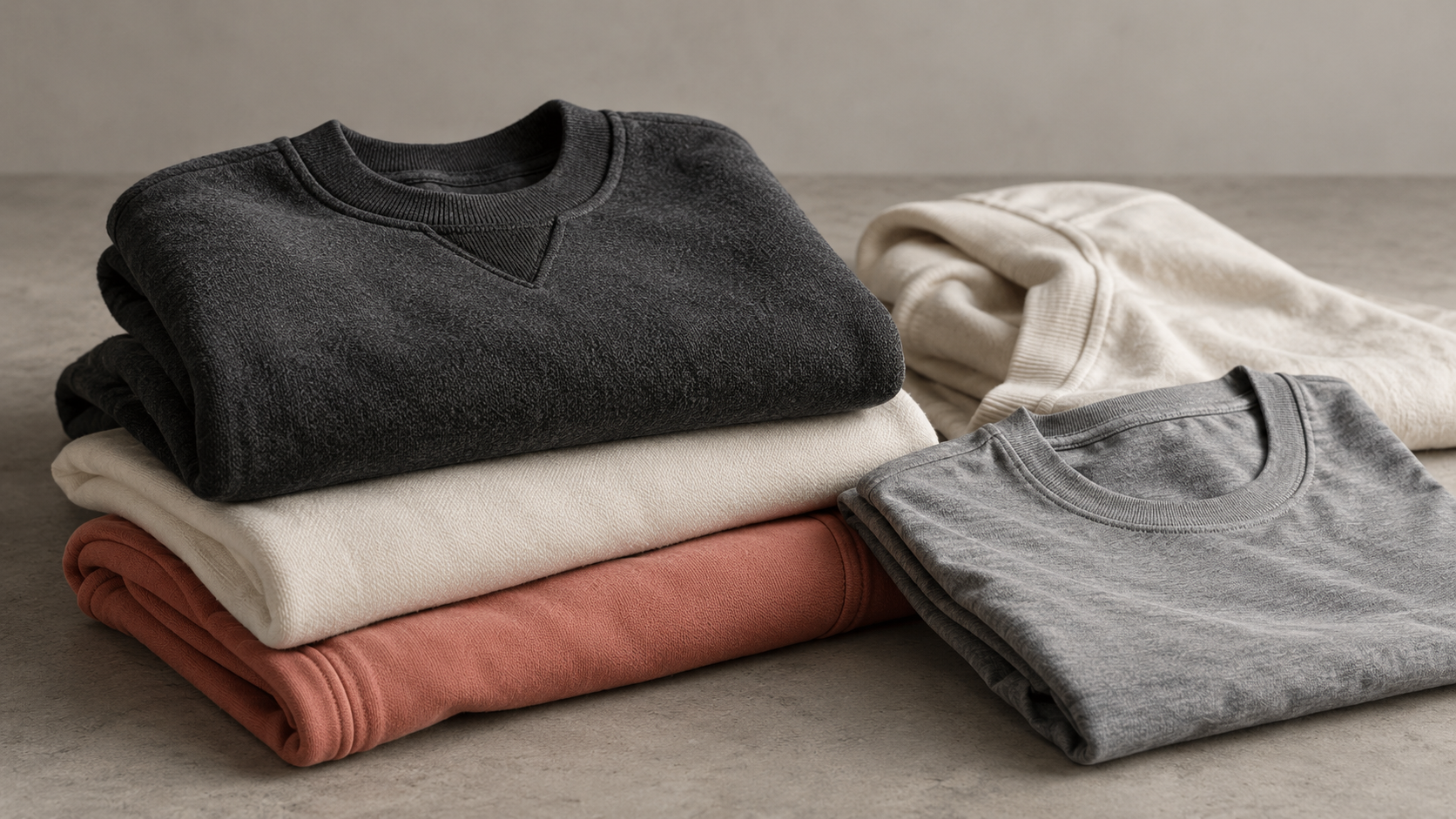
Better Materials, Honest Choices: Our Approach to Apparel
Emerged Style is a family-owned Southern California apparel brand founded in 2023. From the beginning, we have wanted to create clothing that feels considered—not only in what it communicates, but also in how it looks, fits, feels, and wears.
Our understanding of what responsible apparel means has continued to develop. We have learned that it cannot be reduced to one fabric, one label, or one broad promise. Every garment has its own materials, construction, production process, strengths, and limitations.
That is why our approach begins with honesty.
The Garment and the Design Work Together
We do not treat the garment as an empty surface for a graphic. The weight, fit, texture, construction, and intended use of each piece influence whether it is right for a particular design.
A heavyweight organic sweatshirt may provide the structure and feel one design needs. A conventional cotton or cotton-blend garment may offer the fit, color, comfort, or accessibility that makes it the better choice for another.
The goal is not to force every design onto the same type of blank. It is to choose a garment that supports the complete product.
Organic and Recycled Materials
Some Emerged Style products use organic cotton, recycled fibers, or garments made by suppliers with documented material and manufacturing standards. When a product has these attributes, we identify them clearly on its product page.
These options remain an important part of our direction, but they do not describe everything we sell.
We may also use conventional cotton or cotton/polyester garments when they provide the appropriate fit, feel, quality, color, or value for a particular design. We do not present those garments as organic or more sustainable when they are not.
Customers should be able to understand what they are purchasing without having to interpret a broad brand-wide claim.
Quality Is Product-Specific Too
Material choice is only one part of a garment.
Fabric weight, softness, construction, shape, durability, print compatibility, and everyday comfort also affect the finished piece. A garment should be evaluated as a complete product rather than assumed to be better because of a single material attribute.
We select garments with the design and intended experience in mind. Some are substantial and structured. Others are lighter, softer, or easier to wear across different seasons. The relevant specifications belong on the individual product page, where they can help customers make an informed choice.
Thoughtful Production
Our designs are developed with the garment and printing process in mind. We consider scale, placement, readability, color, and how the artwork will interact with the fabric before a product is released.
We also refine designs through production preparation and physical sampling when required. This process helps us identify issues that may not be visible on a screen and make corrections before presenting the finished product.
Thoughtful production does not mean claiming that every part of the process is perfect. It means paying attention, learning from each release, and improving where we can.
Clearer Information, Fewer Broad Claims
We believe responsible communication is part of responsible business.
Instead of describing the entire brand with terms such as “eco-friendly” or “sustainable,” we provide specific information where it applies. If a garment uses organic cotton, recycled fibers, or another documented material feature, we will say so. If it uses a conventional construction, we will say that too.
This allows different products to serve different purposes without creating a false impression that they are all made the same way.
Still Becoming
Better choices remain part of the direction of Emerged Style, but we do not claim to have reached a final or perfect version of responsible apparel.
We are continuing to learn, evaluate garments, improve our design and production decisions, and communicate more clearly. That process reflects the idea at the center of the brand: STILL BECOMING.
For us, progress begins with making thoughtful choices—and being honest about what those choices are.